Navigating the Minnesota Education Landscape
Part of being a bridger is respectfully expressing values and worldviews, while honoring the right of others to do the same (even when there's disagreement). The views and opinions expressed in this blog post are those of the author and do not necessarily reflect the official position, policies, or perspectives of Civic Bridgers. This content is intended to encourage thoughtful discussion and does not represent a formal statement on behalf of the organization.
When I started my position as the External Affairs Coordinator and Civic Bridger Fellow at Great MN Schools in August 2025, I knew that it would be a huge learning opportunity. Still, I thought I had a relatively good understanding of what I was getting into. After all, my dad is a high school teacher and I had completed my own K-12 education four years prior. By the end of my first week, I knew that my existing assumptions around K-12 education systems did not fit neatly into the reality of the Twin Cities. Coming from Atlanta, I had my own unique assumptions about what an education landscape looked like. The dynamics of open enrollment and charter schools not connected to the public district were foreign to me. As I became more comfortable with the larger landscape and the work that Great MN Schools did, a nagging question stuck in my head. How was I going to explain this work to the members of my Civic Bridger Cohort when I hosted my practicum in March? A huge part of my job description focused on informing new populations about the work that we do, but those timelines were much longer than the two hours I had for my practicum.
By the time March 2026 rolled around, my job had shifted multiple times. Expecting a quiet start to 2026 after a very busy end of 2025, my job quickly shifted in response to Operation Metro Surge. We quickly stood up an Emergency Student Connectivity Fund to provide resources and support so students could safely continue their education in the face of unprecedented attacks. January and February were both the fastest and longest months imaginable. As I prepared my practicum, I questioned what to prioritize. Should I spend the whole time talking about how schools and students were impacted by Operation Metro Surge? Should I use the practicum as a space of reprieve and present on other topics?
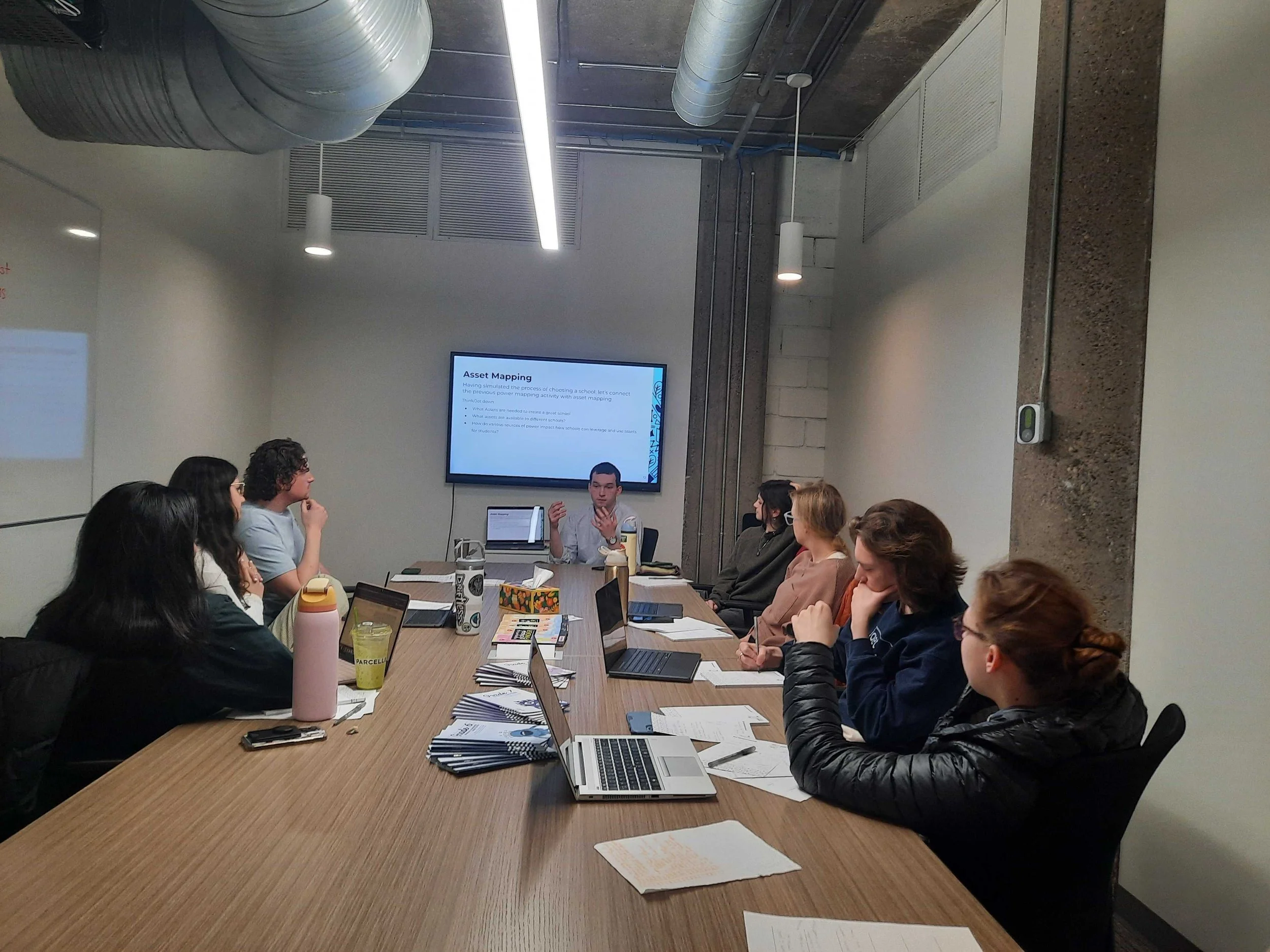
Because my cohort hails from all over the country, I wanted to provide a quasi crash course on the Minneapolis education landscape before diving into discussion. When I started at Great MN Schools, I had strong opinions on some education issues and far less knowledge on others. In my mind, a big part of bridging is meeting people where they are, so I began my practicum by playing a simple word association game. I supplied a number of different education terms, from ‘school choice’ to ‘the teachers’ union’ to ‘the science of reading,’ and asked everyone to write down their gut reaction. As everyone shared, they brought their own knowledge and experience to the conversation. I followed up this exercise with a brief overview of the education system. I focused on what education looks like for different folks, highlighting the stark opportunity gap in Minneapolis, the history of charter schools, and the current state of the system.
Knowing it would be impossible to explain all the dynamics of education in Minnesota without lecturing for two hours, I asked my cohort to step into the shoes of a key stakeholder group: parents. One of the major tools that we create is the Minneapolis School Finder, a free, public rating system that allows parents and families to see potential school options for their children. I assigned each person an address based on various landmarks in Minneapolis, and had them choose schools for their hypothetical children based on a number of factors. Did the school offer busing to their neighborhood? Was the school free? What kind of programs did the school offer? What languages were taught? I wanted to articulate that as needs and resources change, so to do choices. Far too often, parents and families are forced to make trade-offs for their children when deciding where to send them to school.
Once everyone had a taste of parenthood, we reconvened for a discussion about the different power sources that exist in Minneapolis. What are the priorities of different stakeholder groups? Who is best advocating for students? What does it look like to be a great school? More than anything, I wanted my cohort to begin to think about themselves as active participants in the education system. Far too often, people only think about education during two periods, when they are getting their education, and when their kids are getting their education. However, to fully solve the issues plaguing our schools, we need the engagement of everyone, including the perspective of those who most clearly remember what High School was actually like.