Plugging In Through Community Power
Part of being a bridger is respectfully expressing values and worldviews, while honoring the right of others to do the same (even when there's disagreement). The views and opinions expressed in this blog post are those of the author and do not necessarily reflect the official position, policies, or perspectives of Civic Bridgers. This content is intended to encourage thoughtful discussion and does not represent a formal statement on behalf of the organization.
Since starting at Community Power, I have been lucky enough to learn more about something that touches my everyday life, but that I had previously overlooked: the energy system. Where I had previously flipped a switch, saw light, and failed to consider where it came from, working at Community Power immersed me in the importance of electricity and the industry behind it. If you—like most people—don’t work in energy, it can be hard to engage. You might know that power plants burning fossil fuels are an important driver of climate change, but might not know what to do about that. You might pay increasingly absurd amounts to your utility company every month, and not know any of the options that can help you save money. Through my work, I got a sense of the challenges Minnesotans face, like rising bills, and perverse corporate incentives. Finally, and most importantly, I gained a greater understanding of some of the existing resources, like energy efficiency programs, available to solve persistent energy problems.
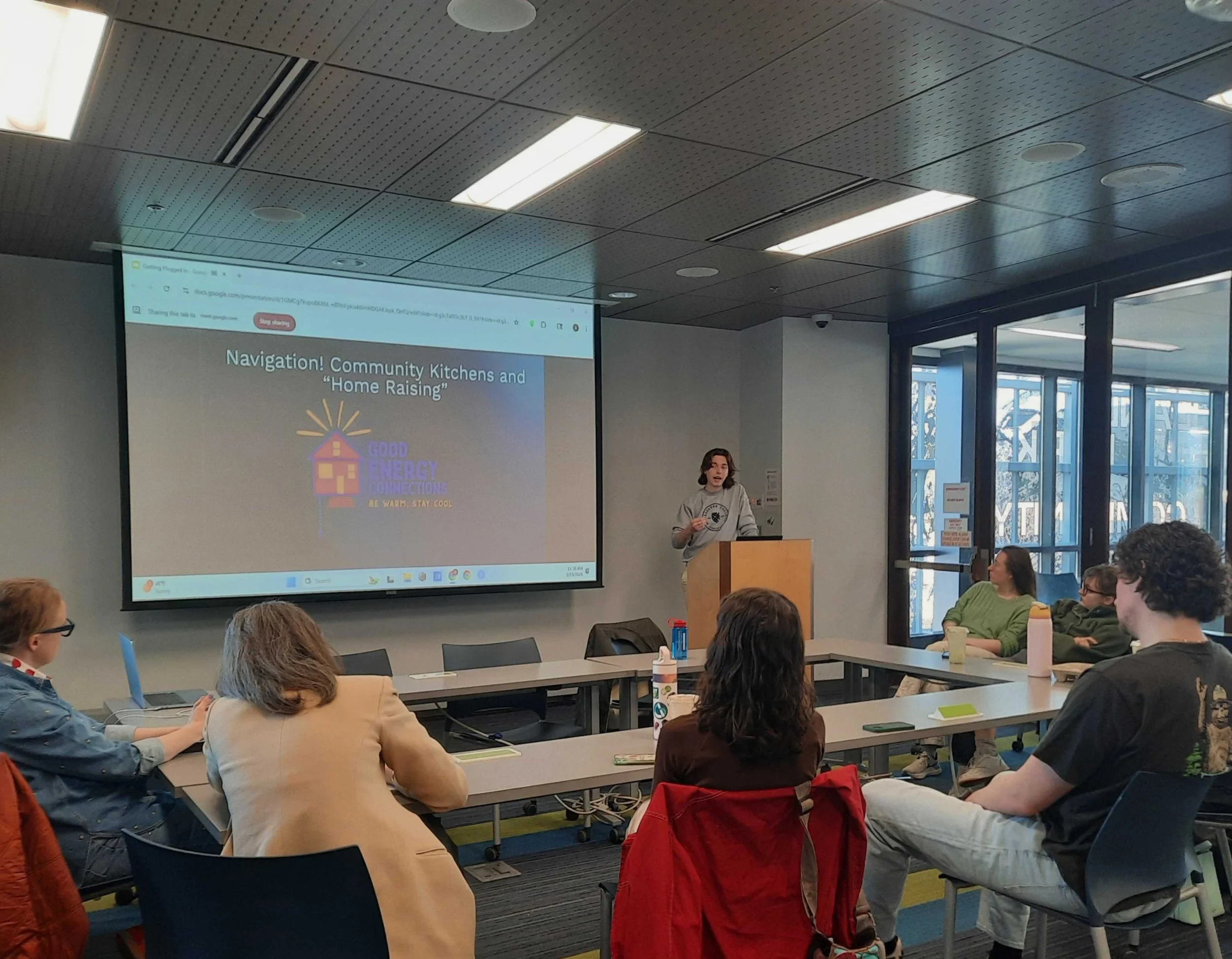
So, to help more people engage with energy, I ran a workshop that helped my peers get a better sense of our participation in the energy system and what we, as civically minded people, can do to improve it. To that end, I introduced them to their utility companies and the energy efficiency programs available to reduce our energy use.
For those of us living in (or just outside) the Twin Cities, our energy is provided by Xcel and CenterPoint. These investor-owned, for-profit utilities sign contracts with our cities to act as exclusive providers of energy services; they are monopolies. Worse, these companies make more money the more power they sell to us the consumer, often burning more fossil fuels along the way. That puts them in conflict with our desires as energy consumers. As consumers we’re interested in services (heat, cold, light, etc.) and would like those services provided with as little energy used as possible. While research done in 2018 suggests that Minnesota could reduce projected electricity and natural gas consumption by up to ⅓—lowering emissions and bills—we know these profit-motivated utilities will not pursue those savings on their own.
Thankfully, state and city governments have created a vast array of energy efficiency programs. Many are run by the energy utilities as part of a legal mandate to increase efficiency, and there are dozens of residential programs available in the Twin Cities right now. Where then to begin? When presented with a list of resident energy efficiency programs the very bright Civic Bridgers Fellows were at a loss. There are too many options, with opaque eligibility requirements, and unclear applications. It is easy to get lost.
So, as a final element of the workshop, we discussed the importance of navigation. Community Power hosts a free energy efficiency navigator program called Good Energy Connections that walks residents through their options, and holds their hand through each step of a home upgrade project. Recalling the way communities come together to do “barn raising,” the fellows discussed how navigators work through their communities to do “home raising.” It’s not enough to have options available. People need a hand accessing what is out there.
I was grateful to have the time to help familiarize my peers with the energy system, drawing their attention to something that touches their daily lives. Through the workshop they were introduced to various assistance programs, and models to share all kinds of assistance in their communities. Energy is not everyone’s cup of tea, but energy assistance provides immediate positive effects, and how we provide that assistance can offer lessons in other areas of our bridging work.