
Civic Bridgers invited 100 students from 32 different high schools in March 2026 for a unique opportunity to compete in a civic leadership competition. At America’s Future Summit, students were tasked with finding and pitching a solution to a problem in the field of climate, education or media. During the first day of the Summit, students learned from industry professionals at the top of their field and began working on their final pitch in teams of 4-8.
When the doors opened on March 9 at 8:00AM, there was a sense that this event was different from any other conference. Student leaders filtered through the doors at Willmar Conference Center in Willmar, Minnesota and received detailed instructions on the plan of events for the upcoming days. Over breakfast, students had the opportunity to greet new teammates and connect over shared passion for civic engagement.
Student keynote speaker Maitreya Reeder kicked off the Summit by helping to bring the mission of the conference into sharp focus. "Helping your community matters so much more than material recognition, because what brings us together is always more important than what sets us apart,” she said. For a student like Maitreya, there is an urgent need for leadership - and now is the time for young people to step up.
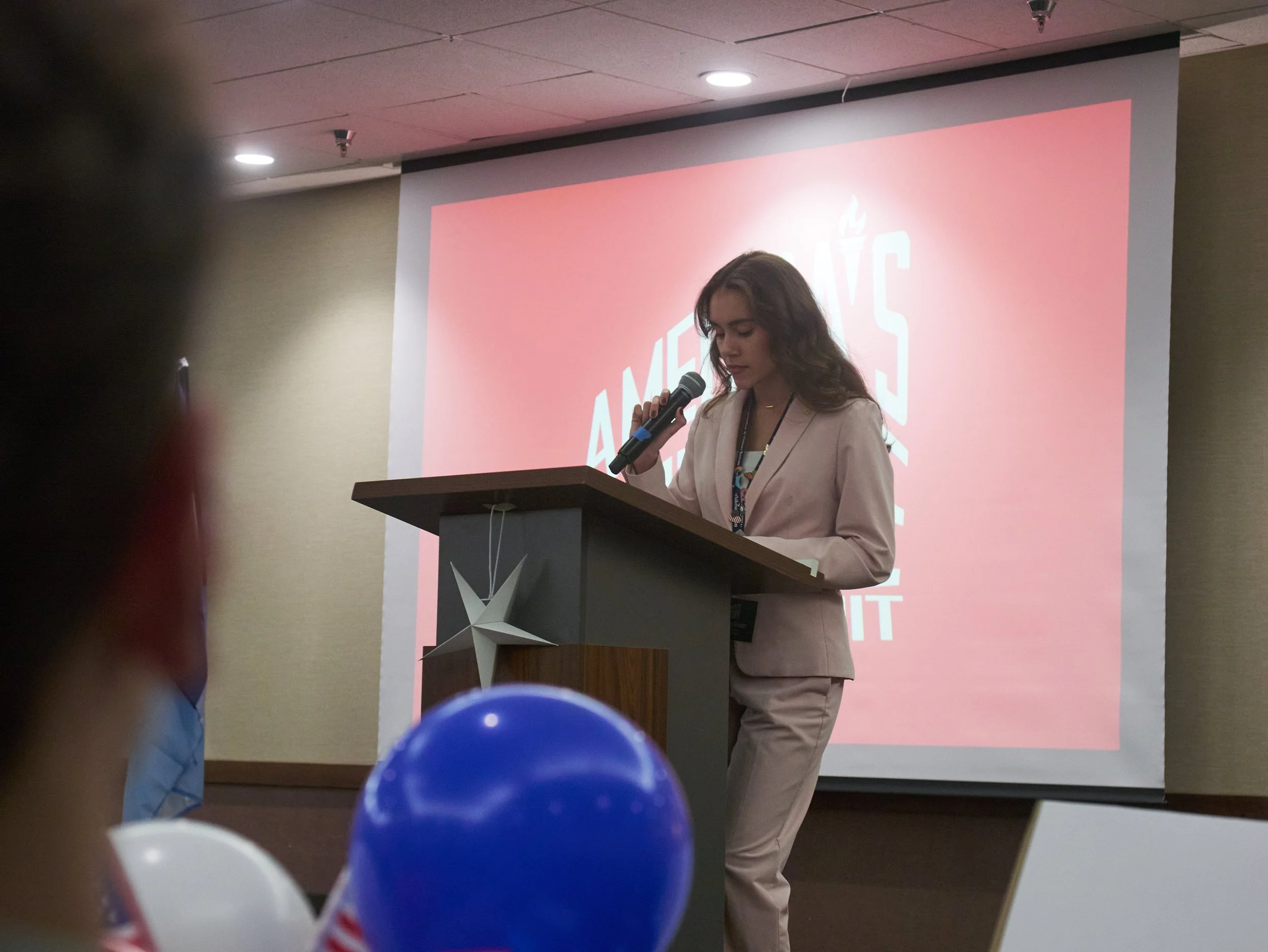
Maitreya Reeder addresses the Summit.
After Maitreya’s inspiring speech, Green Card Voices took the stage. Green Card Voices is a nonprofit organization that connects immigrants and their communities through multimedia storytelling. Executive Director Tea Rozman led a card game called “Story Stitch" that invited students and chaperones to introduce themselves to someone new and engage in conversations around identity. Students took turns sharing something they learned with the larger group. This moment of individual reflection established Summit values of listening and viewpoint diversity.
Alongside the events of the day, a booth set up by A Peace of My Mind offered Summit participants to have a portrait taken and reflect on the question “when did you bridge a divide?” A Peace of My Mind is a multimedia arts project that uses portraits and personal stories to bridge divides and build community.
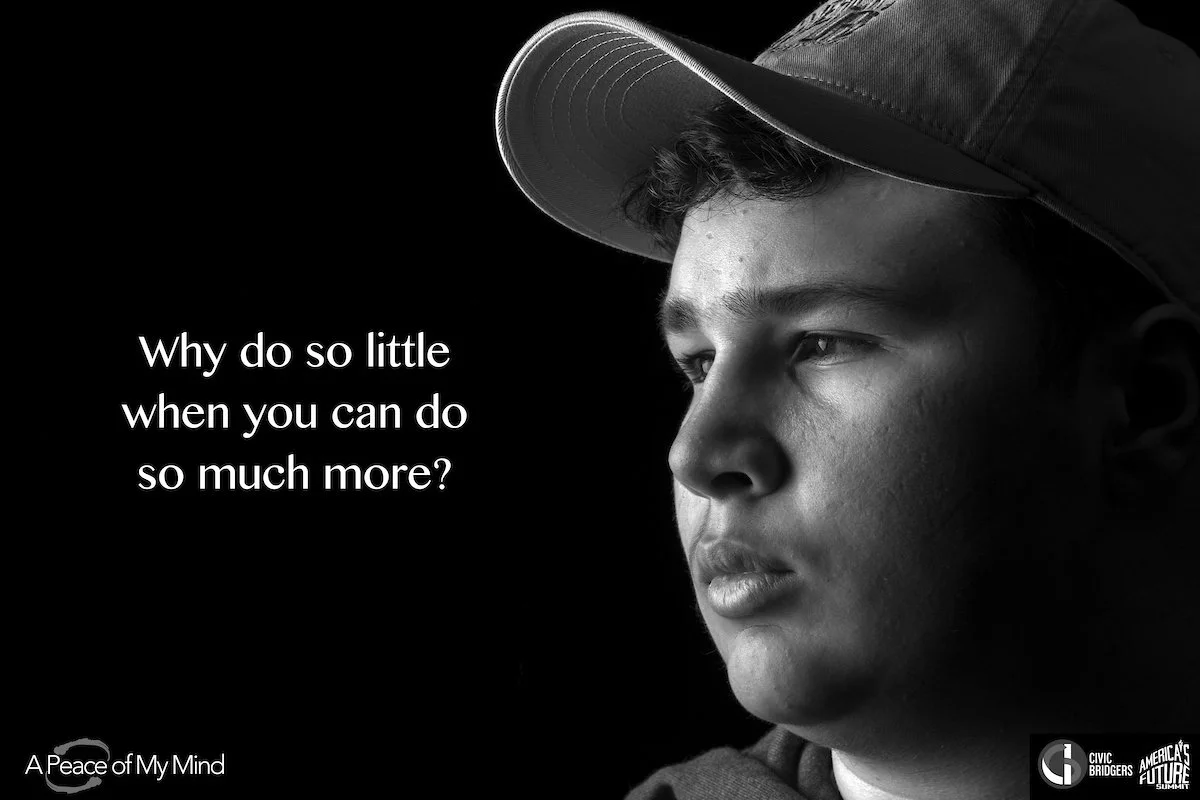
Following the Story Stitch activity, students broke into three separate groups based on what problem they were focused on solving in climate, education, or media. Panelists working at the forefront of their respective fields joined students to provide insight and context into the issues that students were tackling.
The climate panel brought together Nick Martin, Director of Strategic Outreach & Advocacy at Xcel Energy; Betsy Lang, Lead Analyst for Regulatory & Legislative Affairs at CenterPoint Energy; and Carmen Carruthers, Outreach Director for the Citizens Utility Board of Minnesota. The discussion explored the intersections of energy policy, sustainability, and public engagement. While the panelists held very different perspectives in the climate and energy industries, they were able to have an engaging and respectful conversation about the future of energy policy. This conversation offered students a clearer understanding of how long-standing established systems operate.
The education panel highlighted the voices of educators and professionals working in education policy. Paul Schmitz, Principal of Willmar High School joined the panel alongside Julie Rogers Bascom, the Director of Learning & Leadership at the National Youth Leadership Council; and Matt Shaver, Senior Policy Director at EdAllies. Their conversation outlined the evolving role of education policy in shaping academic and attendance outcomes. They emphasized the importance of student input in making education policy decisions.
Rounding out the session, the media panel featured Elizabeth Dunbar, Editor at MinnPost; Wilk Wilkinson, Director of Media Systems and Operations at Braver Angels; and Reid Forgrave, State and Regional Reporter at the Minnesota Star Tribune. They examined the role of media in shaping narratives and encouraging dialogue between different groups.
Students then returned to work time with their team to use the insight that they just learned to begin putting together a pitch. The criteria was clear: put together a 4-minute Shark Tank style pitch that convinces the panel of judges that you deserve the first place $5,000 prize.
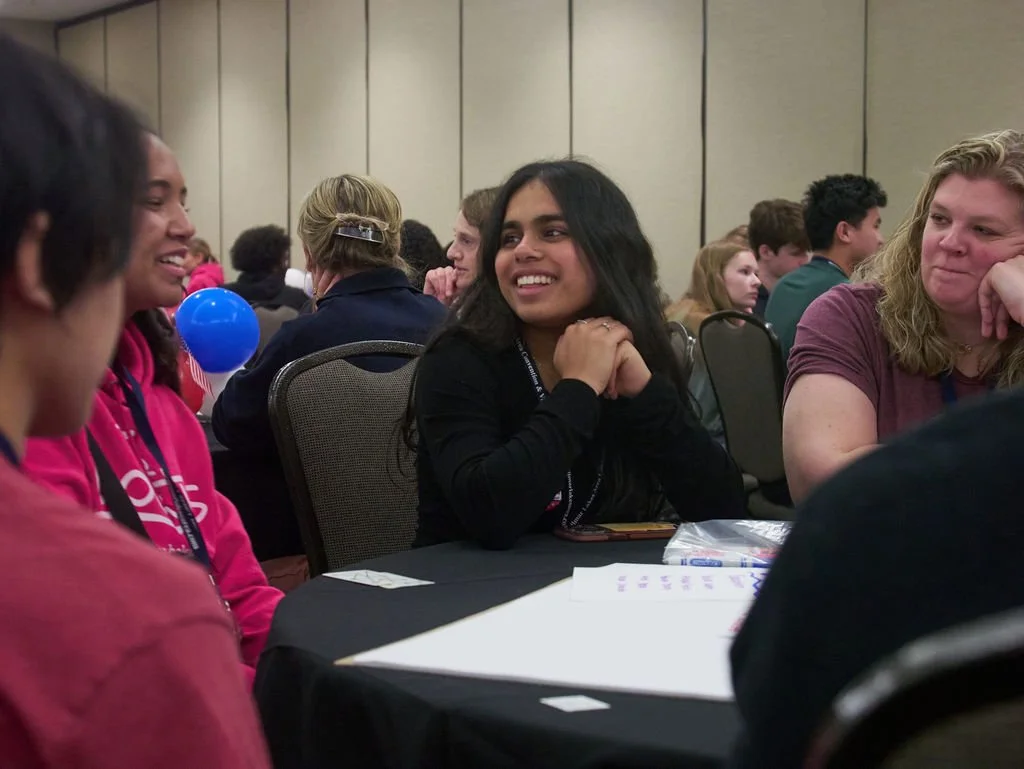
Students then split from their team to receive training on the specific role that they took on within their team. Members of an individual team were able to choose a c-suite style role they would take on for the duration of the Summit. Students divided into groups based on their CEO, CFO, COO, CMO, or CPO role. In this session, professionals holding these roles in their own organizations provided insight into the specificities of their job. In this way, students heard from real leaders on how to work on a team and collaborate with others who have differing perspectives.
After more time to work on their pitch with their team, students sat down for dinner and to watch Khalique Rogers give the evening’s keynote address. Khalique, the Executive Director of Catalyst for Systems Change, detailed his own journey to leadership by advocating for himself and researching potential opportunities. Of finding the motivation to push through setbacks, he said, “dreams don’t work until you do.”
With Kahlique’s powerful speech still ringing in the air, day 1 of America’s Future Summit came to a close. Students retired to the adjoining hotel to plan for the next day. Even though many team’s pitches were in early stages, students left for the day with a clearer understanding of the shared purpose of the Summit.
