
Community Involvement at Neighborhood House
Part of being a bridger is respectfully expressing values and worldviews, while honoring the right of others to do the same (even when there's disagreement). The views and opinions expressed in this blog post are those of the author and do not necessarily reflect the official position, policies, or perspectives of Civic Bridgers. This content is intended to encourage thoughtful discussion and does not represent a formal statement on behalf of the organization.
One of my silver linings to the past few months living in the United States specifically in the Twin Cities of Minneapolis and St. Paul is the opportunity to be in community with my fellow Civic Bridgers during a time that feels emotionally charged and, in many ways, is physically dangerous. These circumstances rendering this fear and danger have also deeply affected the people, families, and communities connected to my host site, Neighborhood House, which has been serving immigrant communities for the last 128 years. Another silver lining has been the ability to witness the outpouring of volunteers and donating community members who have stepped up to support their neighbors and stand with Neighborhood House.
Given the weight of this moment, especially in the Twin Cities, I chose to hold my practicum in a hybrid format to increase access to my Fellow Civic Bridgers.
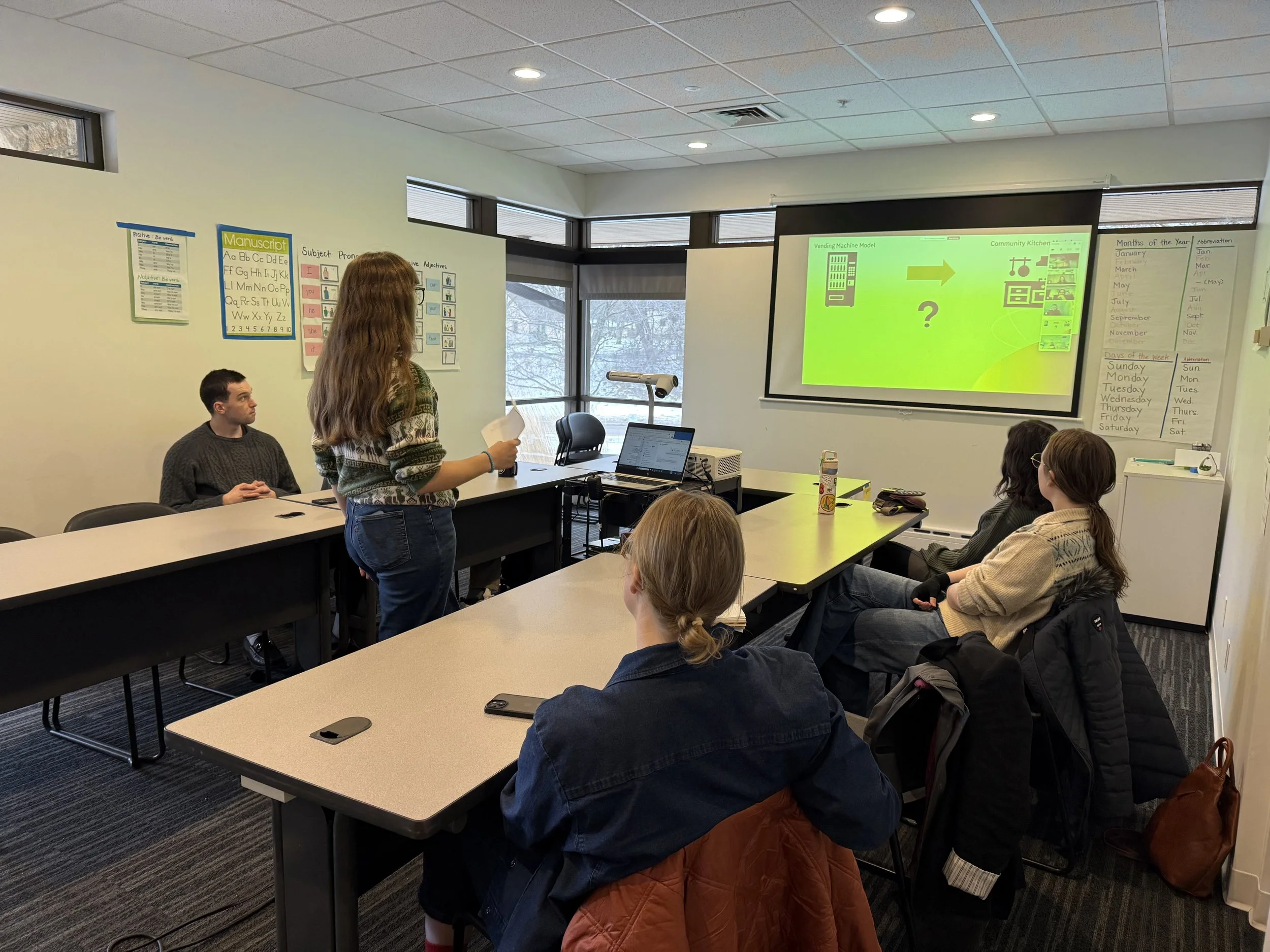
Despite everything happening around us, we came together to explore tools for shifting a community from a ‘vending machine model’ to a ‘community kitchen model,’ an idea introduced to me by the Civic Bridgers Fellowship and a mindset I work with regularly in my role at Neighborhood House. To me, this shift means moving away from the belief that institutions will simply take whatever feedback they receive and make decisions for us and instead embracing a model where everyone actively contributes to building the community we want.
During my year of service, I am conducting qualitative research, including focus groups, surveys, and interviews, to better understand the needs of the community at Neighborhood House’s newest location.
Hosting listening sessions is one way an organization can embody the community‑kitchen model. Instead of a top‑down approach where decisions are made by those in power based on what they think is best, listening sessions invite community members to express their needs directly. When people are asked to participate in shaping the spaces meant to serve them, they show up and offer their expertise. It’s a beautiful thing.
For the workshop, I gave an overview of the process involved in creating a listening session. We discussed focus‑group design, the importance of informed consent, held a mock focus group, and practiced a method called “coding,” which involves breaking raw transcript data into small, digestible pieces that can be reorganized to support conclusions drawn from the discussion.
Throughout the workshop, we had rich conversations about leading questions, different levels of community‑based involvement in designing listening sessions, validity, and how different voices shape the information gathered. My favorite part of the practicum was watching everyone practice coding. I introduced a manual, hands‑on method where fellows used different colored pens to group parts of the transcript, made during the mock focus group earlier in the workshop, in ways that made sense to them. It was fascinating to see what patterns stood out to each person, and I felt I gained insight into my fellows through their approaches.
I am so grateful to have come across the Civic Bridging Fellowship. I have learned so much both at my host site and through the program itself. Creating this workshop was a challenge, as it involved deciding which parts of the listening-session process to focus on and how to make it engaging and useful for my cohort, but it was also incredibly rewarding. The skills I am developing through my qualitative research at Neighborhood House and in creating this workshop are becoming tools I can use to help build communities where everyone benefits. I am excited to continue gathering qualitative data and to see what my fellows learn throughout their own year of service.
I see the Civic Bridgers Fellowship as one that equips people with the tools to build communities capable of setting aside differences and focusing on the shared challenges we all face. I hope to use these skills to be part of and help build diverse and resilient communities that are safe for all.