
2026 Fellowship Orientation Day 3
Following a successful showcase and two days of orientation, the Fellows began Day 3 with Session 11: Conflict and Cognitive Shortcuts.
We began with a simple question: “How does a zipper work? Write the steps.”
At first, the exercise seemed easy. All of us had used zippers countless times, so surely, we understood how they worked. As we compared our answers to an expert explanation, it became clear that many of our explanations were incomplete.
This exercise introduced us to the concept of Cognitive Shortcuts: a mental strategy our brains use to make quick decisions with minimal effort. Rather than analyzing every detail, our brains rely on past experiences, familiar patterns, and simple cues to fill in the gaps. In the case of the zipper, we knew how to use one, but that did not necessarily mean we understood how one worked.
The gap between what we believed we understood and what we actually understood demonstrated the Illusion of Explanatory Depth: a tendency to overestimate how deeply we understand something simply because we are familiar with it.
When we overestimate our understanding, we can become less curious. We may assume we already know enough and, as a result, become dismissive of information that challenges our existing understanding. And when people approach the same issue with this illusion, conflict is likely to emerge.
To explore this further, we learned about the Six Hidden Conflicts: Family, Culture, Society, Education, Work, and Personal Life. These are not simply places where conflict happens. They are also forces that shape how we understand conflict, how we respond to it, and what we bring with us when we enter difficult conversations.
As Bridgers, we were challenged to reframe conflict as something personal or negative, to approach it as a misunderstanding, a creative process, or even a sign that people care deeply about the issue at hand.
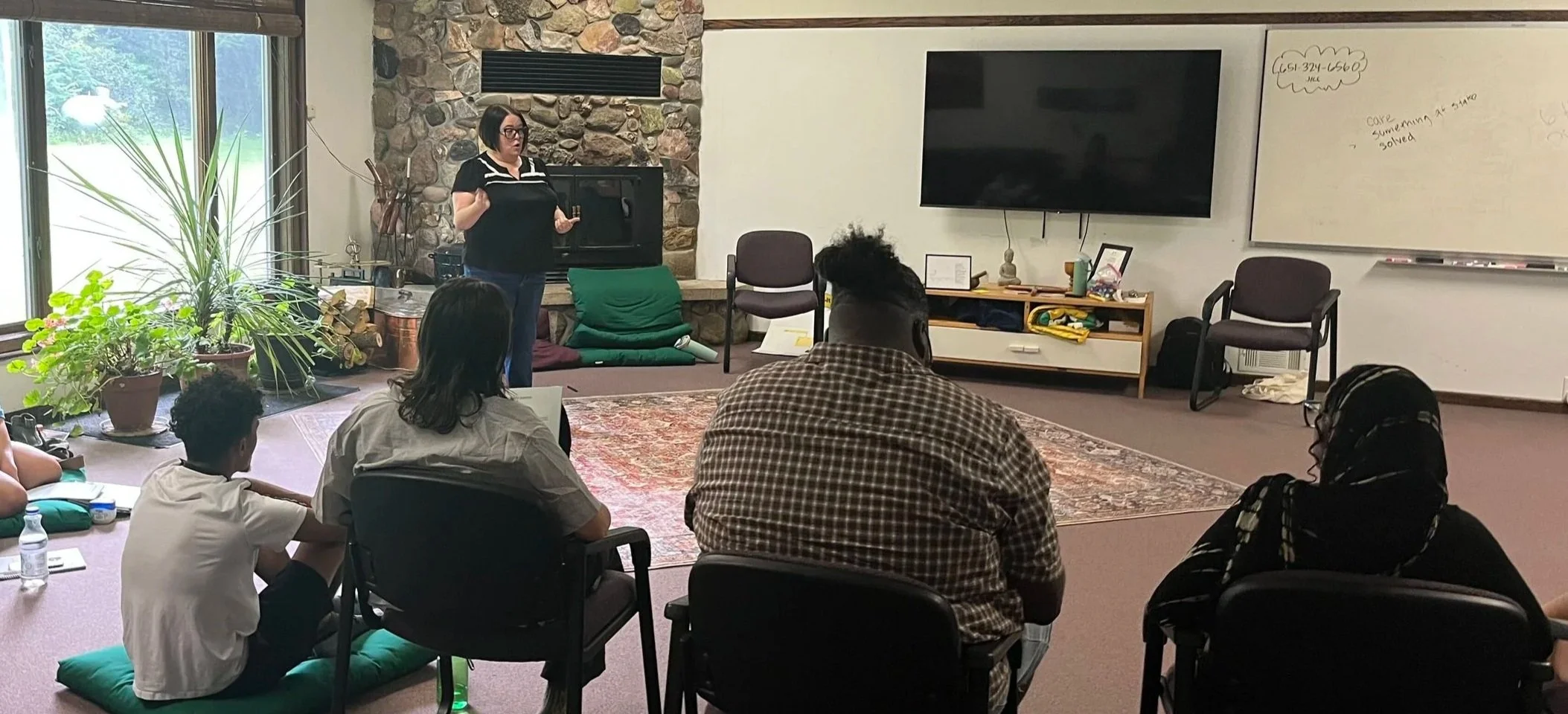
In our next session, Session 12: Media Literacy, we reflected on our own patterns of media consumption and explored what it means to engage critically with digital information.
What stood out was the variety of strategies shared by the Fellows to preserve their intellectual humanity, protect themselves from digital echo chambers, and remain critical of the information they encounter online. There was no single strategy that worked for everyone, but the conversation itself reinforced the importance of being intentional about what we consume and how we allow it to shape our understanding of the world.
After lunch, we reconvened for Session 13: Moral Foundations Theory.
The theory proposes that moral judgment is shaped by several innate, evolutionary-based moral foundations: Care/Harm, Fairness/Cheating, Loyalty/Betrayal, Authority/Subversion, Sanctity/Degradation, and Liberty/Oppression. Everyone places different levels of importance on these foundations, influenced by their culture, upbringing, and broader social environment.
Understanding this helped us think differently about political polarization and conflict. Sometimes, people are not simply disagreeing about what should happen, rather they are approaching the same issue from entirely different moral foundations.
For Bridgers, learning to recognize the foundation from which someone else is speaking can create an opportunity to move beyond disagreement and toward understanding, so that we can find where alignment is possible.
To conclude Day 3, the cohort participated in a team-building exercise that, in many ways, brought everything we had learned throughout the day together.
We created a book of our lives made up of our individual stories and the commonalities we discovered with each other’s stories. We discovered places that had shaped us. We shared moments when we felt included and moments when we felt like outsiders. We revisited conflicts we had experienced and the ways we eventually found alignment.
Finally, we took all we had gained and used it to create an introduction to Chapter One of our individual book. Each fellow’s introduction, while different in content, reflected the same fundamental truth: difference does not prevent common ground.
Perhaps that was the most fitting way to end a day centered on conflict, morality, media, and cognitive shortcuts. Day 3 showed that bridging is not about erasing the differences between us. It is about becoming curious enough to understand those differences, humble enough to recognize the limits of our own understanding, and intentional in searching for our shared humanity.
August 12, 2026