
2026 Fellowship Orientation Day 2
Waking up at the retreat center on our second day of Orientation felt unfamiliar but strangely exciting. It was a grounding moment to see my other Fellows getting ready for the day alongside me. Getting to eat breakfast together also helped further break the ice.
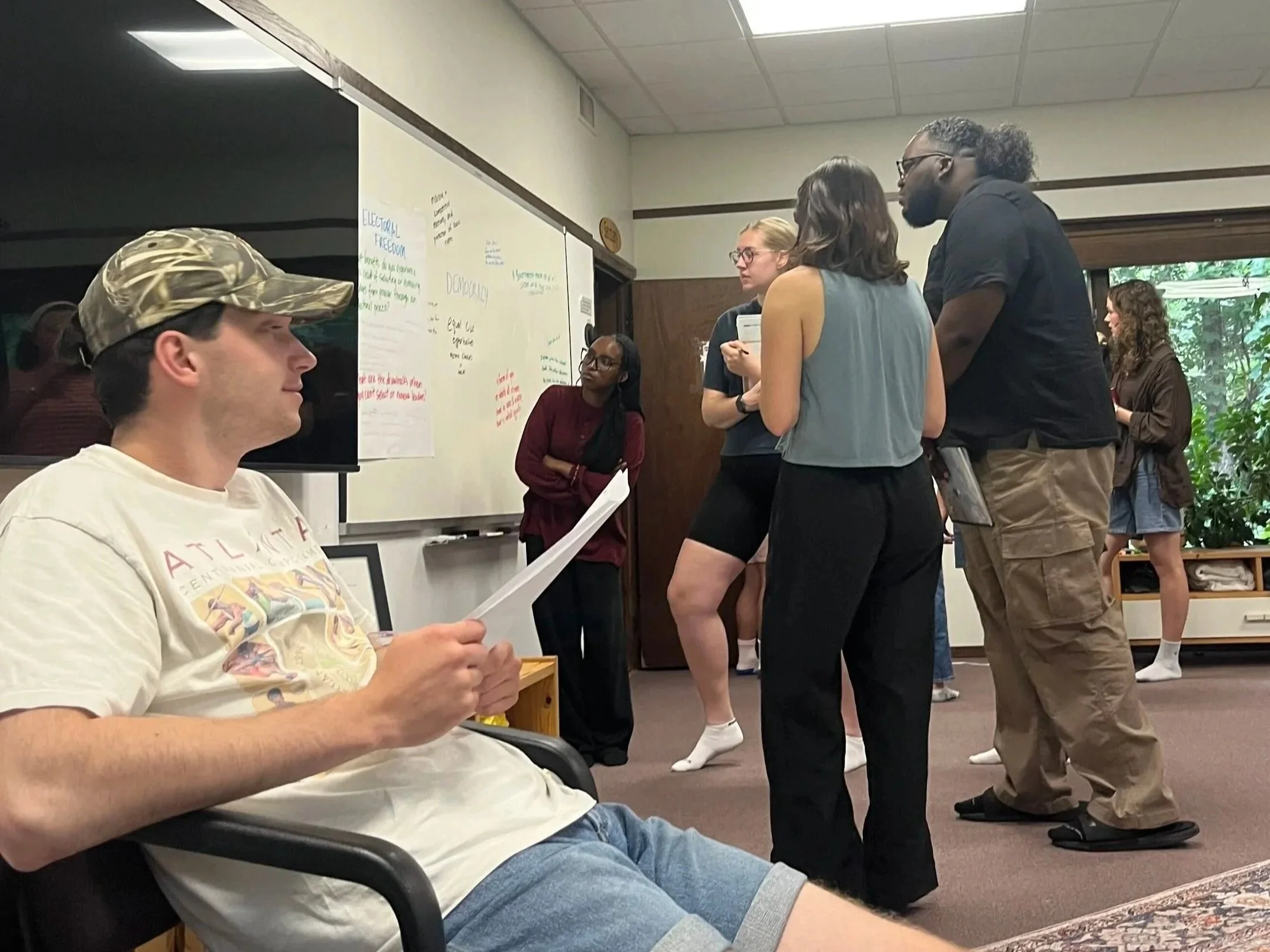
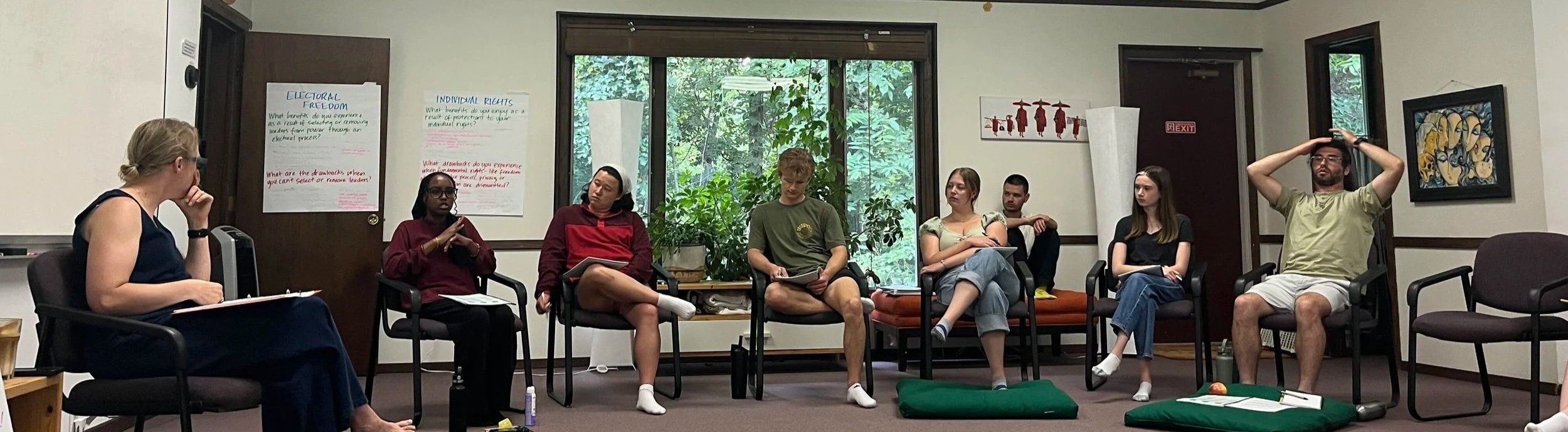
In our first session of the day, Jill Carey, Civic Bridgers VP of Programs, talked about the foundations of American democracy and our role in it. What I gleaned from this session was that a functioning democracy represents equal civic opportunities and engagement across all social stratifications.
Jill went on to build upon knowledge we had about polarization, encouraging us to write about our own individual and group factors that spark or reinforce polarization. She also introduced the concept of Complexity Science, a field of study investigating unpredictable systemic components. We used Complexity Science to help us understand threats to democracy and how to mitigate polarization.
After our lunch break, Angelina introduced how to co-create democracy by envisioning a vending machine and a community kitchen. In these scenarios, the vending machine represents a more individualistic approach to democracy: people submit their vote and expect to see change, like putting money into a machine and expecting a snack. But if the vending machine breaks or runs out of food, we are helpless. Similarly, voters who take this approach have little agency. Treating voting like a vending machine leads to a deficit thinking "what is the government going to do for us" mentality. The community kitchen scenario, by contrast, promotes an asset-based "what are we going to do" attitude by visioning with community members, working through locally rooted institutions, and empowering neighborhoods.
Jill came back to lead a session on Blocking/Bridging/Building/Nonviolence. We got to go through a list of actions in each category. Most of the fellows and I found many of our actions were concentrated in blocking and some bridging. Hopefully by the end of this year we will have more capacity building actions to include in our list. Jill also touched upon nonviolence and how it stimulates cooperative civic action when engaging in civic activities. We got to go outside and explore the beautiful retreat center while going through Martin Luther King’s 6 principles of nonviolence captured in his 1958 book “Stride Towards Freedom”.
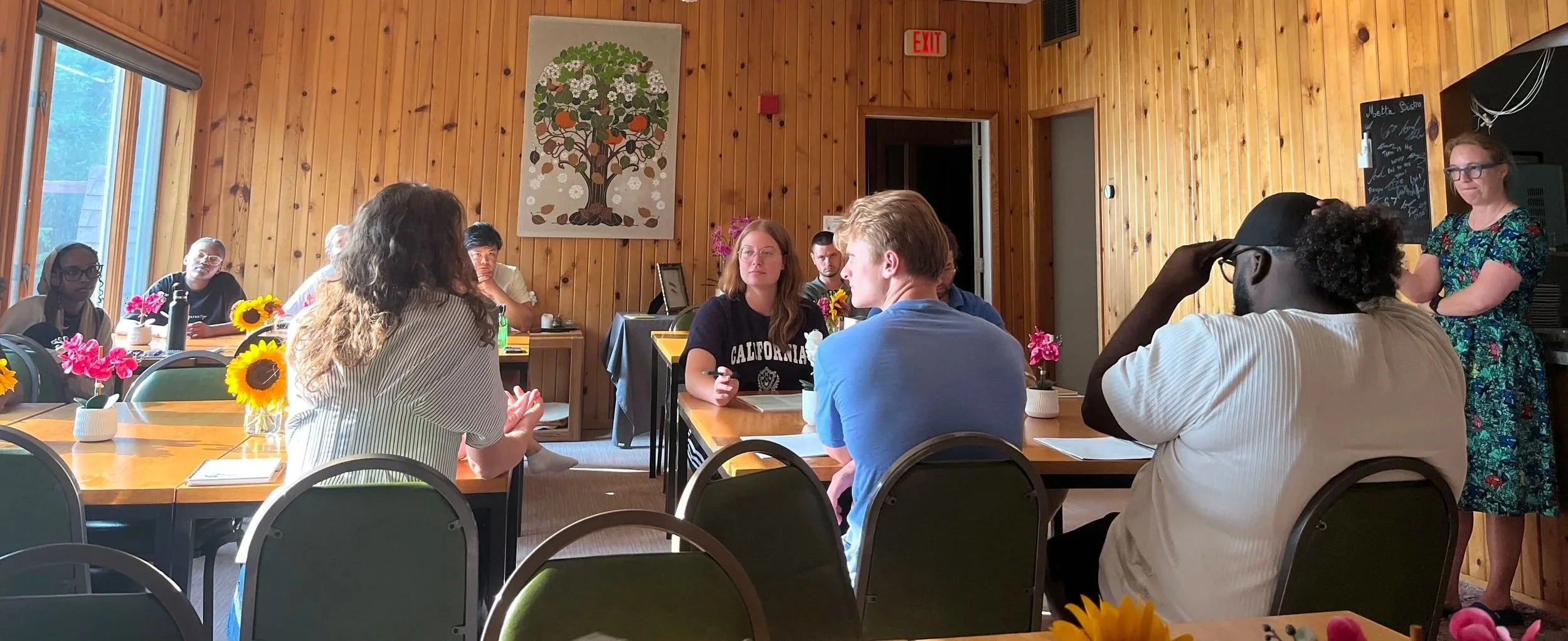
Libby Stegger, Executive Director of Civic Bridgers, hosted our last session of the day, asset and power mapping. We looked through a list of assets we have access to (local leaders, cultural or religious orgs, mental health services etc.) and ways we can use these opportunities as sources of power (access to stakeholders, aligned interests, funding, legislation). Having this concept broken down made me feel like I had more power than I thought I did as an average citizen. In the real world example she gave a group of teens tried to construct a skate park after receiving complaints for skating downtown. I was moved by the efforts the teens took trying to construct a skate park in Burnsville and the mayor taking an effort to connect with her constituents instead of vilifying them. The teens used asset and power mapping with neighborhoods, businesses and companies and raised funds by organizing local concerts.
“Overall, the day reminded me that democracy isn't something we sit around and wait for, it's something we can build. I left the retreat with curiosity, more tools, and more hope than I arrived with.”
Overall, the day reminded me that democracy isn't something we sit around and wait for, it's something we can build. I left the retreat with curiosity, more tools, and more hope than I arrived with. The sessions gave me new tangible ways to address problems I see in my own community, and strategies I can use to work with others to fix them.
August 11, 2026