Bridging Rural Divides at Initiative Foundation
Part of being a bridger is respectfully expressing values and worldviews, while honoring the right of others to do the same (even when there's disagreement). The views and opinions expressed in this blog post are those of the author and do not necessarily reflect the official position, policies, or perspectives of Civic Bridgers. This content is intended to encourage thoughtful discussion and does not represent a formal statement on behalf of the organization.
When I began planning for my practicum, I was not sure how to proceed. The Initiative Foundation has a great variety of work in their region and I struggled to narrow my focus for a single presentation. Eventually, I decided to place an emphasis on my day-to-day work, as I had more depth of knowledge in the entrepreneurship and community programs. In addition, I chose to provide a high-level overview of the history of the Initiative Foundation, as the creation of the 6 Initiative Foundations in the 1980s is not necessarily common knowledge, at least in my experience.
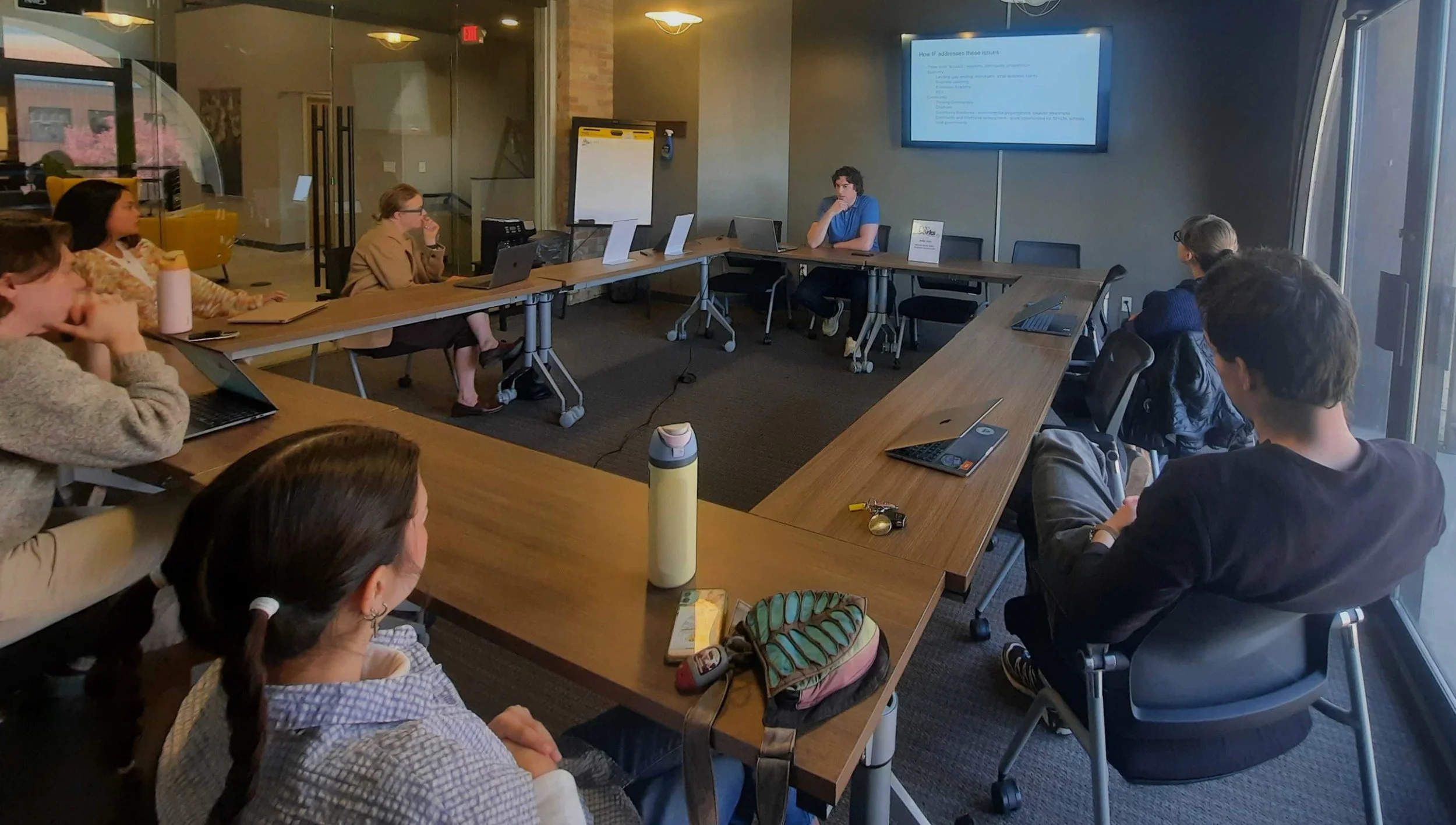
I chose to host my practicum in the Initiative Foundation’s new St. Cloud office, which provided an excellent hosting space. It also helped ease the travel burden of the Fellowship cohort, who were coming from the Twin Cities metro area, making their drive shorter than it would be to the main Initiative Foundation office in Little Falls.
I really appreciated being able to discuss the Initiative Foundation and my work with the Fellows, due to the differences in our positions and efforts. Unlike many of the other Fellows, my work is focused on rural communities and the revitalization of Minnesota outside of the metro area. I organized an exercise in which the Fellows chose a community in the Initiative Foundation’s service area and researched what the location had to offer. This helped illustrate some of the challenges facing communities in rural Minnesota, such as communities with no local grocery store, and how these unique challenges differentiate my work from my cohort’s work. I also hoped that this exercise would help to illustrate how the experience of a rural Minnesotan would look different from one who lives in the metro area.
I used this demonstration to pivot and examine my work at the Initiative Foundation, and how efforts are made to address unique challenges in rural Minnesota. Entrepreneurship work is one of the most significant in this regard; the Initiative Foundation works to bolster entrepreneurship in their service area through a number of means. Namely, the Enterprise Academy program, which offers a 12-week business training course to applicants, and the REV program, which builds a team of community members and enables them to improve entrepreneurship in their town. 2026 is the first year of the Initiative Foundation’s REV program, in partnership with the University of Minnesota Extension, so I had the unique perspective of seeing the program built from the ground up. I also shared my experience in Thriving Communities, which, like REV, builds a team of community members — though the program places a more general emphasis on community building than entrepreneurship specifically.
Discussing the Thriving Communities program allowed me to address how bridging manifests in my work at the Initiative Foundation. While the term bridging is not used, it is very much a goal for programs like Thriving Communities, which seek to connect community members and encourage active civic engagement from citizens. Though bridging might look different in rural communities as opposed to urban ones, it is still vital to a healthy community. Bridging plays a significant role in the Initiative Foundation’s work, and is vital to the revitalization we seek to achieve in rural Minnesota.