
Entering only the second month of my year of service as a Data and Program Development Fellow with Civic Bridgers, it certainly felt daunting to think about giving a professional development session to my co-Fellows. My time at Civic Bridgers had thus far focused on program evaluation for our Fellowship Orientation—using both qualitative and quantitative metrics—and measuring impact in the bridging field. As a bit of a survey geek myself, I decided to focus our session on survey design for program evaluation and bridging.
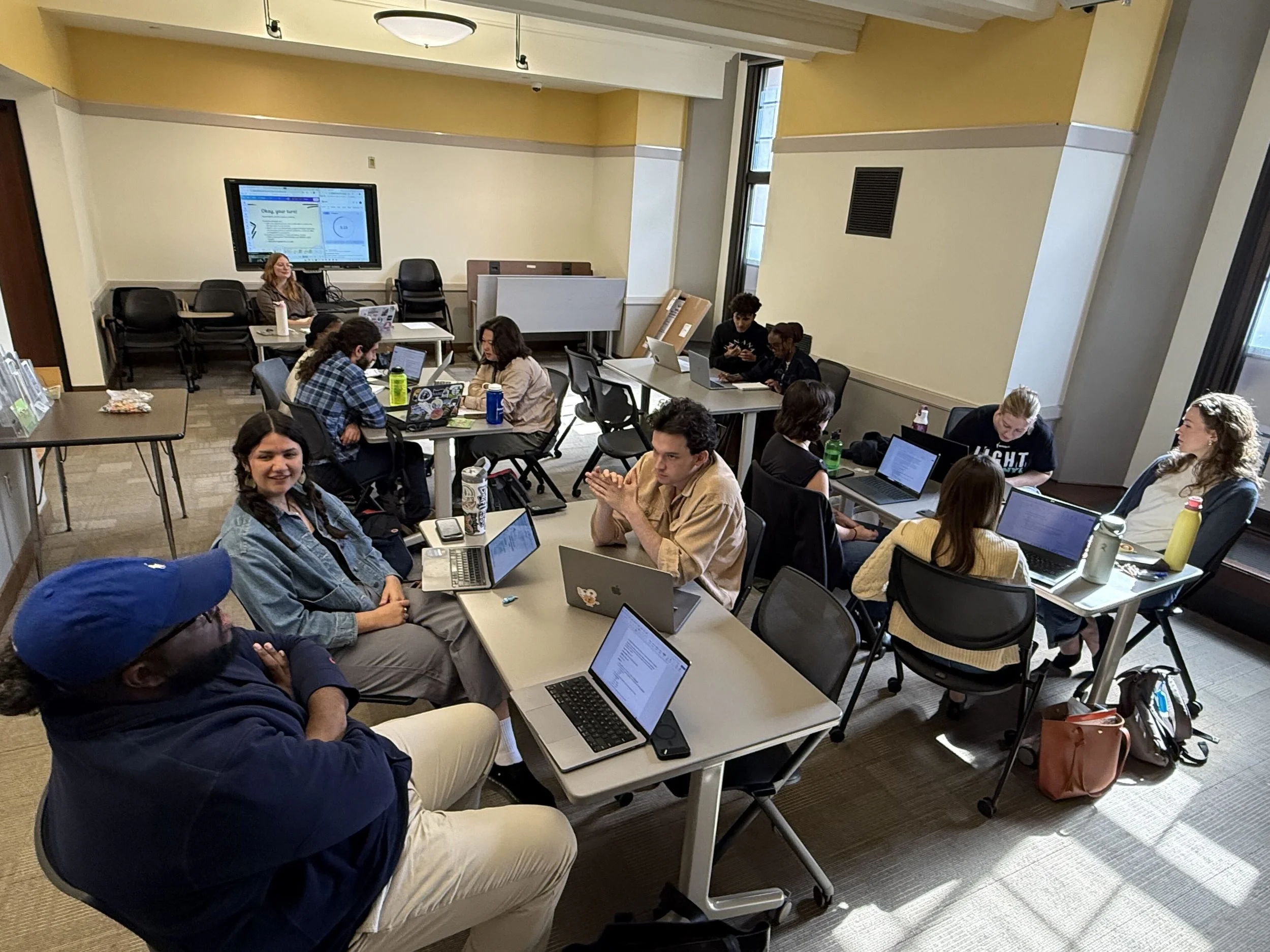
On the second Friday of October, the Fellows gathered in one of the community rooms at the George Latimer branch of the Saint Paul Public Library. We opened the session by taking a bad survey (which I may have had a little too much fun creating) and reflecting on that experience. Fellows noted how they felt constrained by required questions and embedded assumptions, as well as confused by questions with misaligned answer choices.
The activity was a great launching point for our crash course in survey practices. We covered issues with double-barreled and leading questions, assumptions, and the consequences of poor survey design. We also discussed best practices for avoiding those mistakes in our own surveys.
Survey design—particularly good survey design—can be an effective and important tool in the nonprofit space, especially for bridging organizations that aim to connect people to each other and helpful resources. Surveys allow nonprofits to measure the impact of their programs, make adjustments to improve performance, evaluate volunteer experience and satisfaction, demonstrate impact to community stakeholders, and gather input to better understand community needs. Bridging works best when communities have a say!
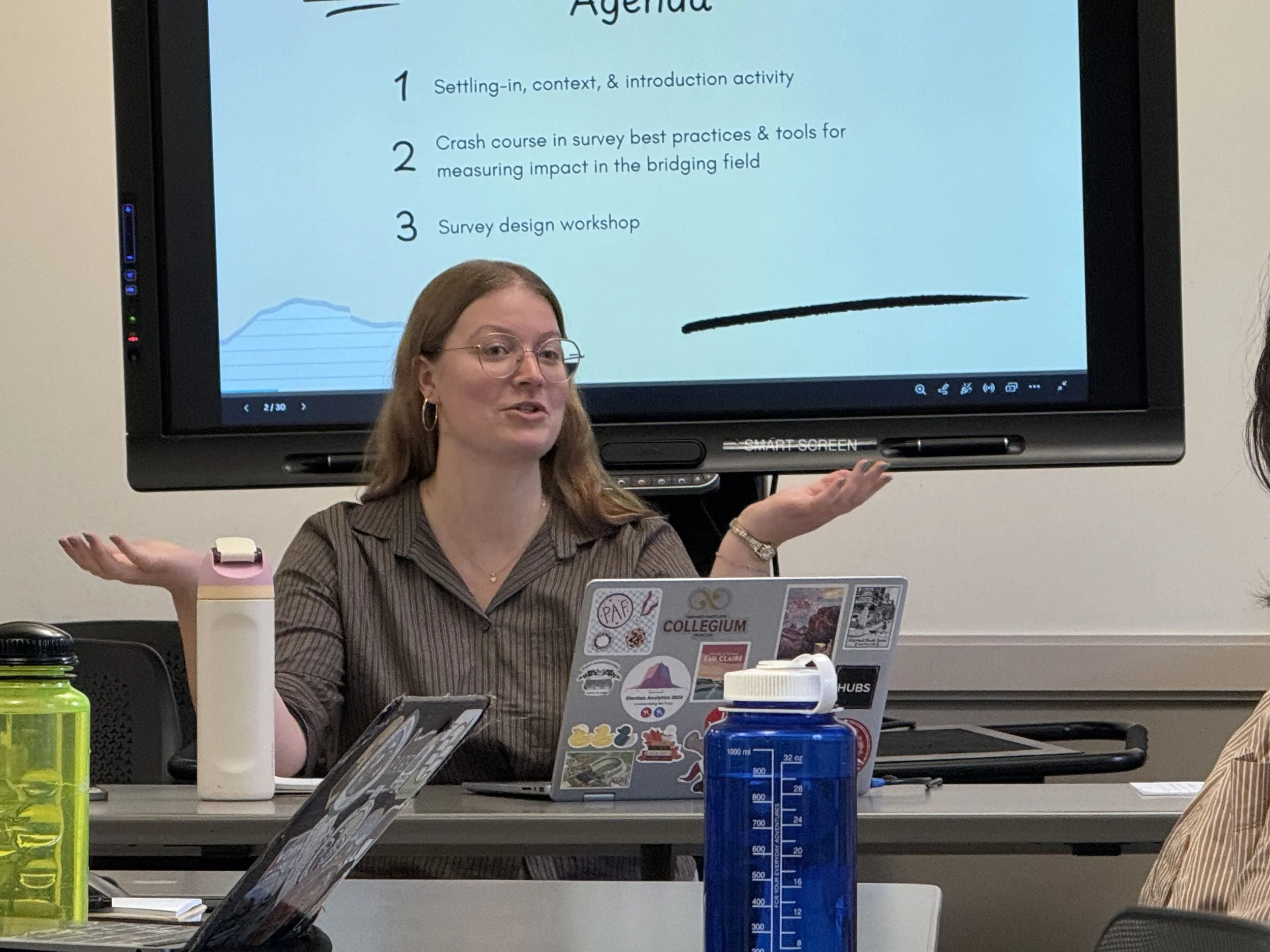
We next transitioned to how organizations measure impact in the bridging field. We started with the Social Cohesion Impact Measurement (SCIM) tool, initially developed in 2021 and currently maintained by the Listen First Project. The SCIM tool was developed in consultation with bridging organizations in the United States and measures both polarization and bridging. We also explored the Peace Impact Framework, developed by ConnexUs, as a more global approach meant to be customized to fit the needs of individual communities.
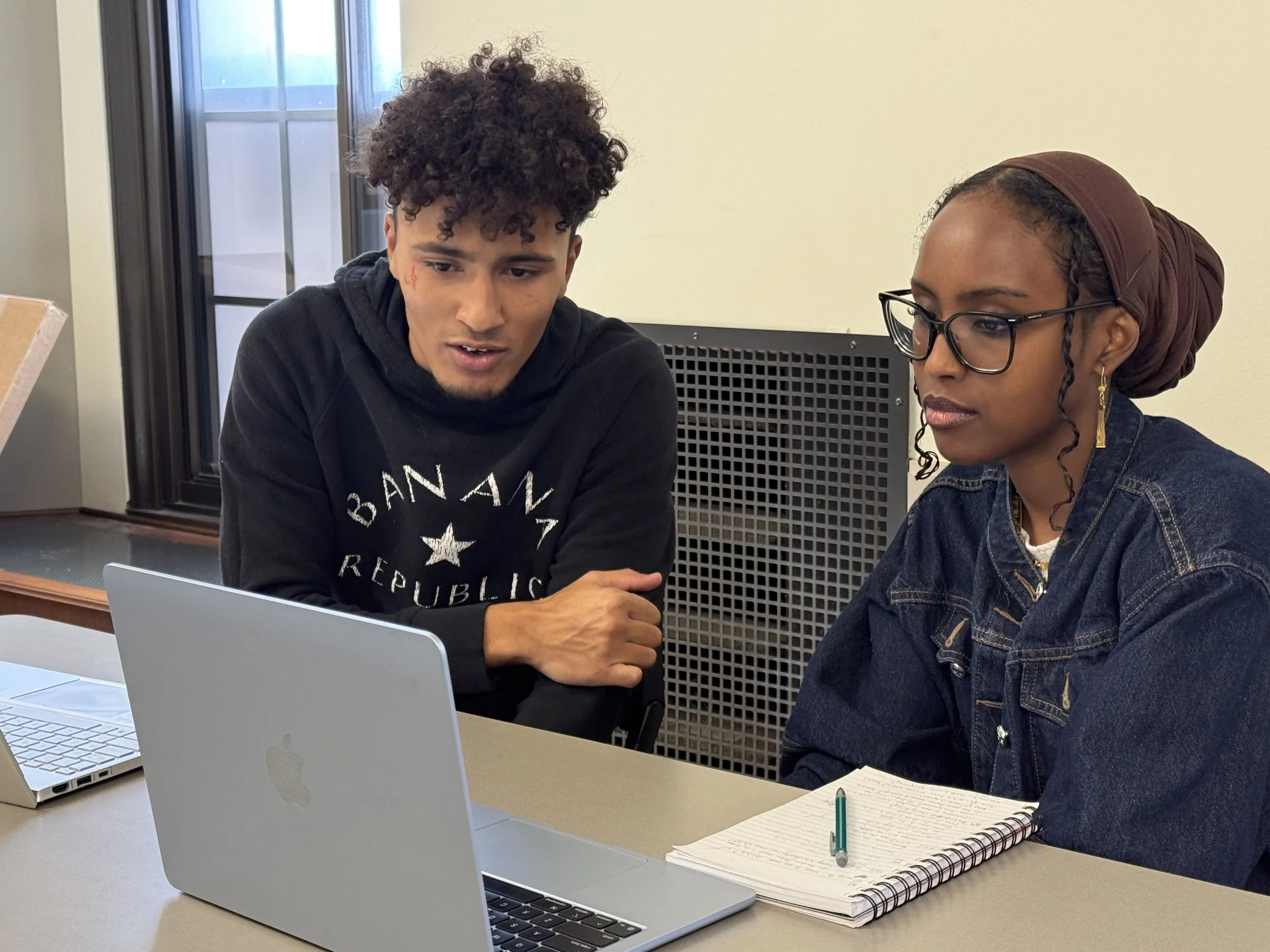
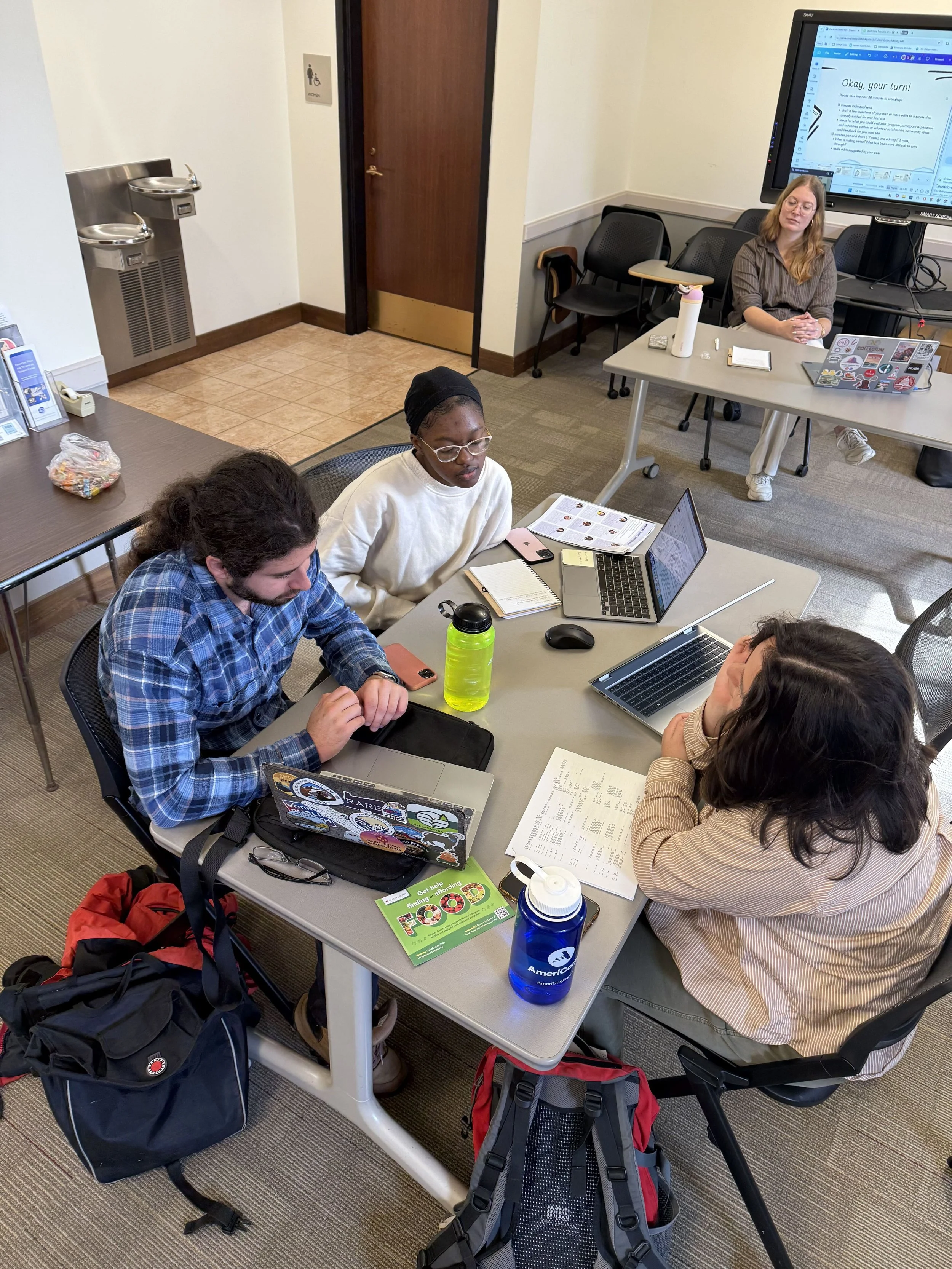
After the crash course, Fellows were given time to workshop survey evaluations for use at their host sites. The Fellows serve in a variety of nonprofit areas across the state of Minnesota, so there was a lot of variety in the surveys being developed. Surveys aimed to measure everything from volunteer satisfaction to experience using educational resources.
After the workshop, I brought the Practicum to a close, and we shared lunch at a burger shop near the Practicum site. We sat outside, with leaves falling around us—and sometimes into our food. All in all, it was a pleasure to spend the warm October afternoon diving deep into the particulars of survey design and program evaluation with my peers. I look forward to our next session in November!
October 9, 2026